
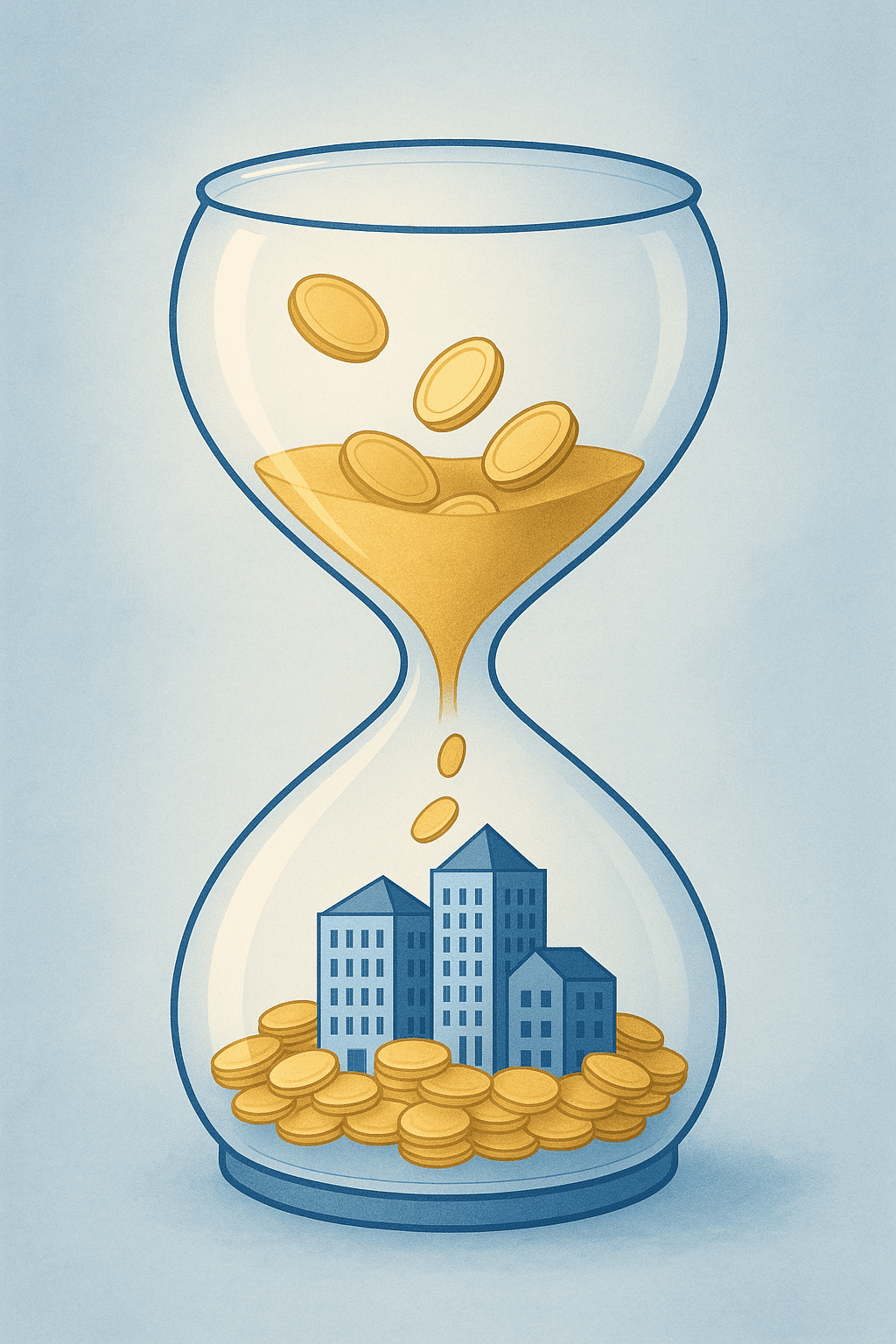
The Myth of Liquidity Above All
Many investors have been taught that liquidity equals safety. The ability to buy or sell with a click feels comforting—especially in a world of instant information and market updates. Stocks, mutual funds, and ETFs can be sold in seconds, which seems like an advantage.
But liquidity comes at a price: volatility. Public markets react instantly to headlines, sentiment, and speculation. A portfolio that feels flexible can also be unpredictable.
By contrast, private real estate investments trade less often and are valued less frequently. That slower pace is one reason investors choose them. Real estate doesn’t fluctuate based on daily market noise—and that’s part of its strength.
(See 6 Myths About Passive Real Estate Investing)
The Reality: Stability Comes from Illiquidity
Real estate isn’t designed for quick trades—it’s designed for long-term wealth building.
Unlike stocks, a multifamily property or neighborhood shopping center provides steady rental income and the potential for appreciation over time. It’s a tangible, income-producing asset tied to essential human needs like housing and retail.
For Limited Partners (LPs), that stability means they can invest confidently and avoid daily decision fatigue. There’s no need to react to market dips or breaking news. Many LPs view these holdings as set-it-and-forget-it assets—disciplined, long-term positions that work quietly in the background while life moves forward.
Why Liquidity Can Be Overrated
Liquidity can be both a comfort and a curse. It tempts investors to act emotionally—selling low, buying high, or constantly “rebalancing” in response to fear or hype.
Illiquidity, on the other hand, creates a built-in pause that protects long-term thinking. When you can’t sell impulsively, you’re more likely to stay the course and let the investment compound.
For professionals nearing retirement, this discipline can be especially valuable. Real estate’s illiquidity encourages a patient, income-focused mindset—exactly what many portfolios need for long-term financial health.
North Carolina: A Market That Rewards Long-Term Investors
At NC Capital Group, we focus on stabilized, income-producing properties in economically vibrant North Carolina markets.
North Carolina continues to see steady population growth, strong job creation, and record economic development investment. Cities like Raleigh, Charlotte, and their surrounding “halo counties” are attracting employers and residents alike—driving sustainable demand for housing and neighborhood retail.
In this environment, real estate ownership becomes even more resilient. The same steady growth that brings traffic to our shopping centers and tenants to our apartments helps mitigate investment risk.
For investors focused on long-term cash flow and appreciation, North Carolina’s economic momentum is a foundation for confidence.
The Takeaway: Illiquidity = Intentional Investing
Illiquidity isn’t a flaw—it’s a feature. It encourages patience, protects against emotional decisions, and aligns perfectly with a long-term wealth-building strategy.
While public markets swing with sentiment, private real estate moves with fundamentals: people, places, and productivity.
So no—you can’t sell a shopping center or apartment building with a click. But that’s precisely why it works.

Eddie Coleman, CCIM, is the Principal Investment Officer at NC Capital Group. With over 40 years of experience in Commercial Real Estate in North Carolina and South Carolina, his experience spans multifamily, retail, office, historic adaptation, etc. In addition to advising clients and brokering transactions, he has extensive knowledge of North Carolina through experience in corporate site acquisition, development, capitalization, HUD financing, etc. He holds the prestigious Certified Commercial Investment Member (CCIM) designation.