

When you invest passively in a real estate deal, someone has to do the actual work.
That role belongs to the General Partner (GP).
A General Partner is the party responsible for finding, acquiring, financing, operating, and ultimately exiting a real estate investment. Limited Partners provide the capital, General Partners provide the expertise, execution, and day-to-day leadership.
In short:
GPs run the business of the property.
What a General Partner Does
A General Partner’s responsibilities span the entire life cycle of a real estate investment.
Before the Investment
- Identifies market opportunities
- Sources and evaluates properties
- Performs financial underwriting and risk analysis
- Structures the legal entity (typically an LLC)
- Arranges financing and debt terms
- Raises equity from Limited Partners
During Ownership
- Oversees property management and operations
- Implements value-add strategies (renovations, leasing, cost controls)
- Manages budgets, reserves, and cash flow
- Handles lender and investor reporting
- Makes strategic decisions as market conditions change
At Exit
- Determines optimal timing for a refinance or sale
- Executes the disposition strategy
- Manages closing and profit distribution
This is not a side job. A good GP treats each property as an operating business.
Alignment: Why General Partners Have Skin in the Game
One of the most important things to understand about a General Partner is alignment of interests.
In well-structured deals:
- GPs typically invest their own capital alongside LPs
- GPs earn the majority of their compensation through performance
- GPs succeed when investors succeed
That alignment is intentional. It keeps incentives focused on long-term value, not short-term fees.
GP vs. LP: A Simple Comparison
| Role | General Partner (GP) | Limited Partner (LP) |
|---|---|---|
| Primary Function | Operates and manages the investment | Provides capital |
| Day-to-Day Involvement | Active | Passive |
| Decision-Making | Full authority | None |
| Time Commitment | High | Minimal |
| Returns | Performance-based | Income + profit share |
Both roles are essential. They simply serve different purposes.
Why the General Partner Matters So Much
In passive real estate investing, you’re not picking a property—you’re picking a team.
The same building can produce very different results depending on:
- Underwriting discipline
- Operational execution
- Capital management
- Market knowledge
A strong GP reduces risk not by eliminating uncertainty—but by managing it intelligently.
How This Works at NC Capital Group
At NC Capital Group, the General Partners are responsible for every aspect of the investment—from acquisition through exit.
We invest in:
- Multifamily housing
- Neighborhood shopping centers
We have specific expertise in underwriting, financing, and operating these asset classes. We acquire in North Carolina where live and work. We have deep local market knowledge and long-standing relationships with brokers, lenders, attorneys, government, and contractors.
Our focus is on capital preservation, steady cash flow, and long-term value creation, with disciplined underwriting and hands-on property and asset management.
We are partners in the investment earning our share through performance, and only after Limited Partners get theirs.
The Bottom Line
A General Partner is the engine behind a passive real estate investment.
For investors who want:
- Real ownership
- Professional management
- Exposure to real estate without operational headaches
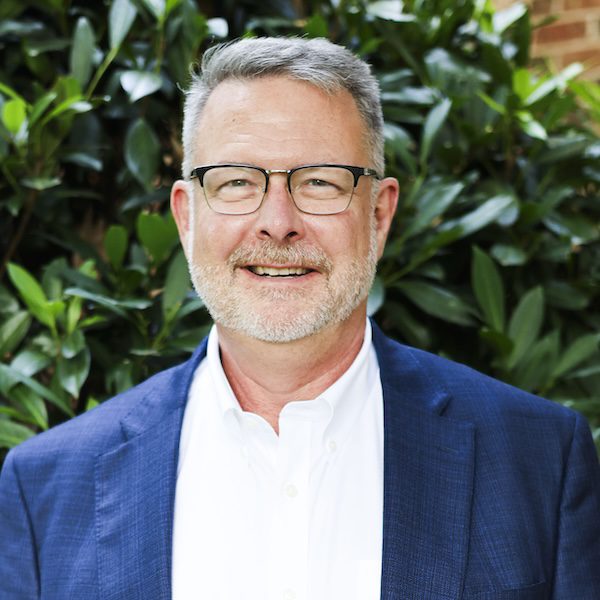
Doug Kline, PhD, has held income properties in North Carolina for more than 20 years. He holds a North Carolina broker’s license, and is a member of the National Association of Realtors and the Triangle Real Estate Investors Association. He holds an MBA and a PhD in business. In addition to his real estate activities, Doug enjoyed a successful career in academia, achieving the rank of Full Professor in the Cameron School of Business at UNC Wilmington. He was honored with research and teaching awards, served as Director of the MS Computer Science and Information Systems program, and was awarded the endowed position Distinguished Professor of Information Systems.