
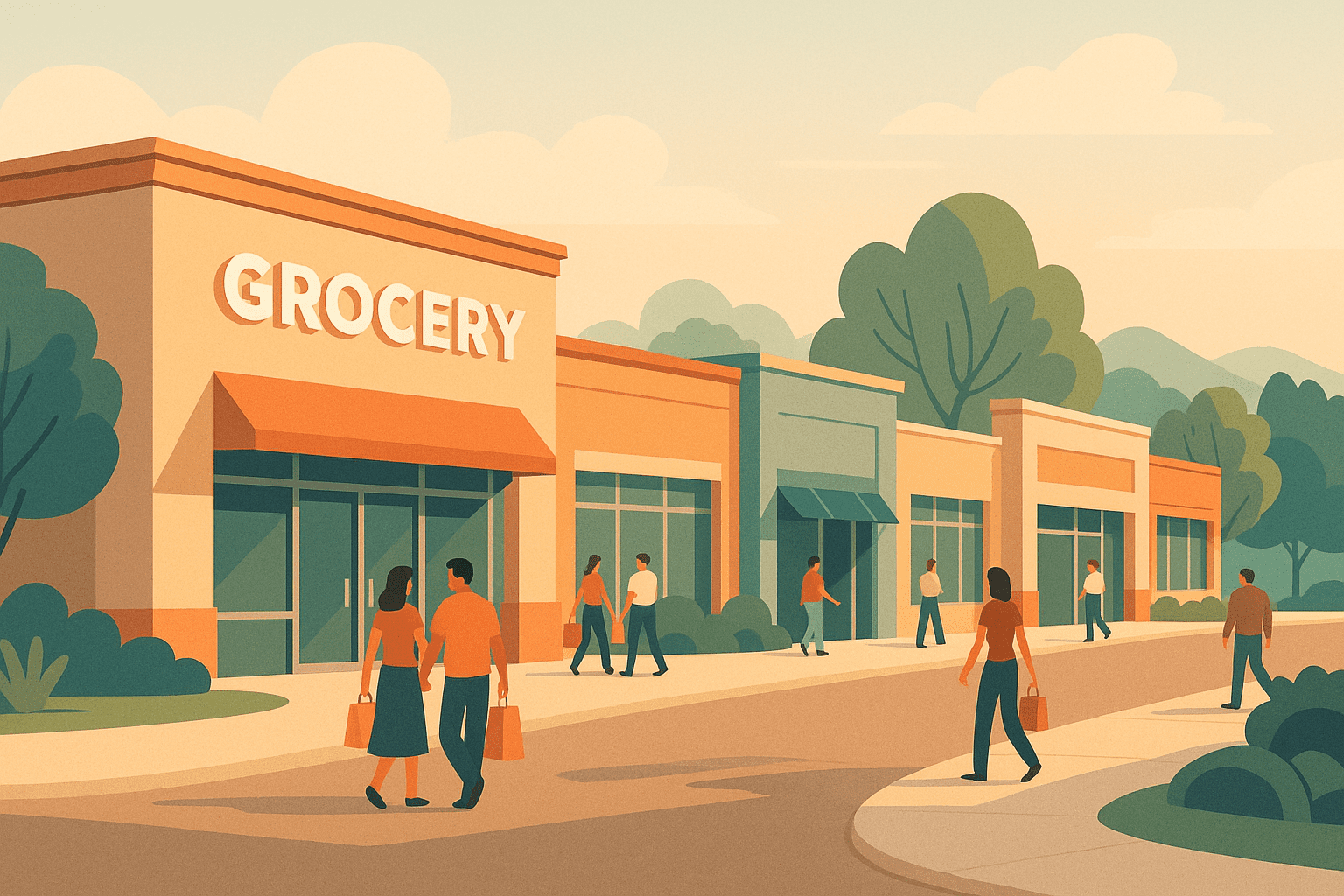
Neighborhood shopping centers are one of the most reliable and misunderstood real estate assets. They don’t behave like malls, they don’t depend on fashion trends, and they aren’t threatened by e-commerce in the same way other retail categories are. Instead, they exist for one purpose: serving everyday needs.
For investors who want stable income, inflation protection, and a real estate category that actually benefits from population growth, neighborhood shopping centers provide a clear, data-backed value proposition. They deliver predictable cash flow, long-term tenant demand, and downside protection—qualities many wealth-building professionals and pre-retirees specifically look for in an alternative investment.
What Neighborhood Shopping Centers Are
A neighborhood shopping center is a small to mid-sized retail property located close to residential areas. These centers typically include:
- A grocery store or pharmacy as the anchor tenant
- Medical offices or urgent care facilities
- Service-based businesses such as salons, dentists, gyms, pet care
- Quick-service restaurants and takeout kitchens
- Dollar stores or other essential-needs retailers
The key concept is essential retail. These are places people visit because they have to, not because they feel like browsing. That distinction is the source of their resilience.
Why Investors Like Neighborhood Shopping Centers
Neighborhood shopping centers attract real estate investors for four main reasons: consistent cash flow, anchor-tenant stability, e-commerce resilience, and inflation protection. Each factor plays a specific role in reducing risk and supporting long-term returns.
1. Consistent Cash Flow
Most tenants sign long-term leases—often five, ten, or fifteen years—with fixed annual rent increases. This structure creates predictable income for investors. Because the centers serve daily-needs customers, foot traffic stays relatively steady across economic cycles. Even during a recession, people still buy groceries, fill prescriptions, and pick up meals.
2. Anchor Tenants That Create Stability
Grocery stores, pharmacies, and medical practices are anchor tenants for good reason. These anchors pull customers into the center and support the smaller businesses around them. A grocery anchor, for example, can generate thousands of visits per week. That steady flow of customers improves tenant retention and strengthens the center’s income profile.
Credit quality matters as well. A national or regional grocery chain provides more stability than a single-location retailer. Investors benefit directly from that credit strength.
3. Built-In Resilience to E-Commerce
Neighborhood shopping centers are fundamentally resistant to online disruption. Many of the tenants provide services or goods that must be consumed in person:
- Haircuts
- Dental appointments
- Fitness classes
- Quick-service restaurant meals
- Prescription pickups
- Urgent care visits
Even grocery e-commerce reinforces the physical store. “Click and collect” orders require a local store to fulfill them, increasing the importance of grocery-anchored sites.
4. Inflation Protection Through Lease Structure
Most neighborhood shopping center leases include automatic annual rent escalations. A 2–3% increase per year is typical. In addition, rising construction costs make replacement more expensive, which supports the long-term value of existing centers. Together, these factors help the property’s income keep pace with inflation.
Who Neighborhood Shopping Centers Are Best For
Neighborhood shopping centers are well aligned with the goals of:
- Wealth-building professionals
- Investors in or near retirement
- People seeking steady, quarterly cash flow
- Investors who want lower volatility than stocks
- Individuals looking for community-centered assets with essential utility
These assets do not rely on speculative growth. They thrive on population density, everyday needs, and consistent tenant demand.
Why Neighborhood Shopping Centers Matter in Today’s Market
Several structural trends in the economy support neighborhood centers:
- Consumers prefer convenience retail. Short trips, quick errands, and essential purchases dominate modern shopping behavior.
- Population growth increases tenant demand. Fast-growing states like North Carolina strengthen grocery and medical-anchored retail.
- Service tenants are expanding. Health, wellness, pet care, and fitness all require physical locations.
- Construction costs have risen. Higher replacement costs raise the value of existing neighborhood centers.
These trends position neighborhood shopping centers as one of the more defensive and reliable real estate categories available today.
The Role of Neighborhood Shopping Centers in Portfolio Diversification
From a portfolio perspective, neighborhood shopping centers behave differently from traditional investments. They:
- Provide income independent of stock market volatility
- Offer inflation-hedged leases
- Deliver real asset backing through tangible real estate
- Benefit from demographic and migration trends
- Have historically lower default rates than discretionary retail
For investors balancing portfolios with bonds, equities, and other alternatives, neighborhood shopping centers add a stabilizing component.
How NC Capital Group Approaches These Investments
NC Capital Group invests in neighborhood shopping centers located in high-growth North Carolina markets. Our strategy focuses on:
- Grocery-anchored centers
- Properties with existing cash flow
- Markets with strong population and job growth
- Conservative underwriting and disciplined operations
- Passive, hands-off structures for investors
- Long-term ownership horizons that allow appreciation and rent growth
We improve centers through better tenant mixes, refreshed exteriors, and operational upgrades that support tenant performance. Our team has decades of experience buying, operating, and improving income-producing properties in these exact markets.
Looking Ahead: The Opportunity for Investors
Essential retail is positioned for long-term durability. As the U.S. population continues shifting toward high-growth states—and as service businesses expand their footprints—neighborhood shopping centers remain well supported by both economic fundamentals and consumer behavior.
For investors seeking stable income, downside protection, and diversified exposure to real estate, neighborhood shopping centers offer a compelling addition to a modern investment portfolio.
If you’d like to explore how this asset class fits into a long-term wealth strategy, NC Capital Group can help you understand the opportunities and risks in clear, practical terms.

Phil Neari, CPM, is a graduate of the University of Northern Colorado and has been active in the commercial real estate and property management business for over 30 years. He holds the prestigious Certified Property Manager designation (CPM) awarded by the Institute of Real Estate Management and is a Licensed Real Estate Broker in North Carolina, South Carolina, Virginia, Tennessee, and Texas. Phil is a member of the International Council of Shopping Centers (ICSC), Institute of Real Estate Management (IREM) and the National Association of Realtors (NAR). Phil is Broker in Charge of our Winston-Salem office and oversees property management and leasing activities. He also provides advisory services to select buyer and tenant representation clients as well as identifies potential investment and development properties.