
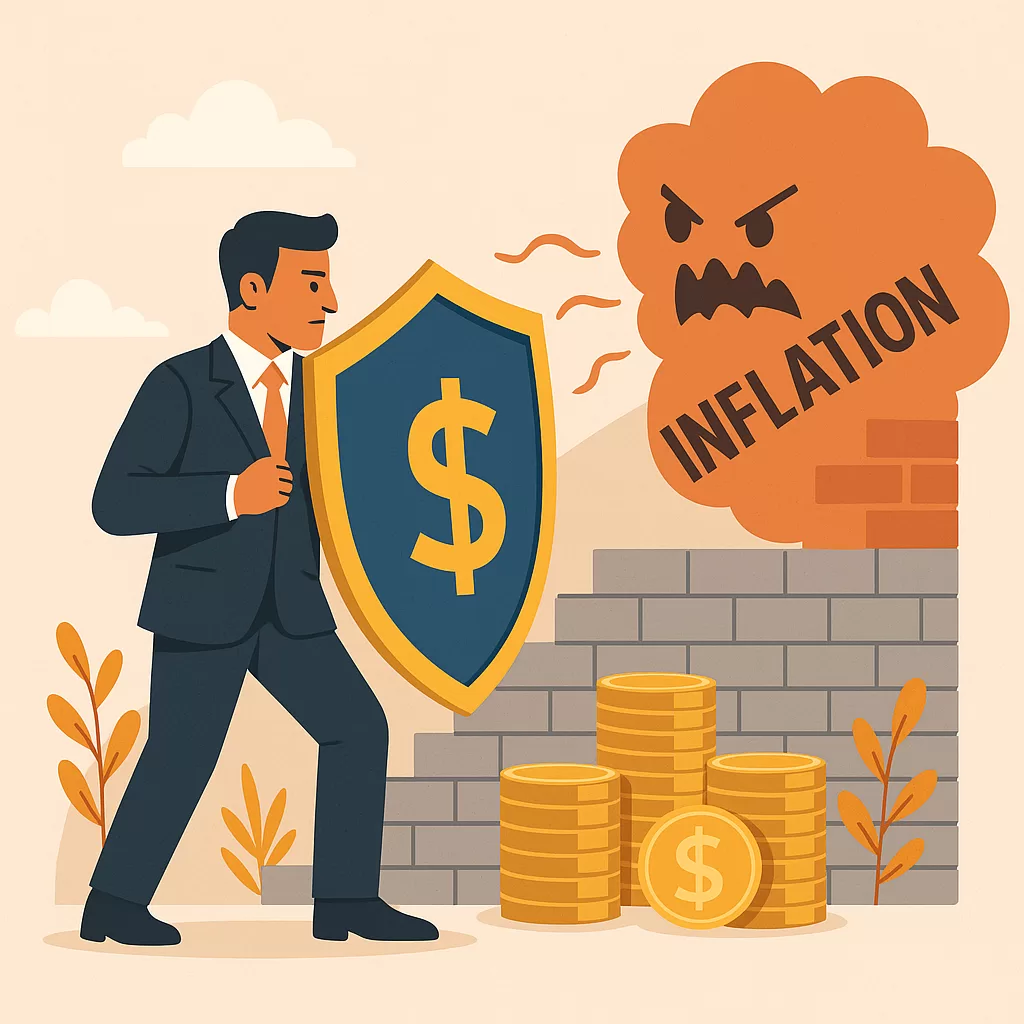
Even for high-earning professionals, inflation has become harder to ignore.
The cost of everything — from groceries and healthcare to housing and travel — has risen meaningfully in recent years. And while salaries have kept pace for some, the real value of money is under pressure.
If you’re planning for long-term financial stability, it’s worth examining how different types of investments behave when inflation persists — especially real estate.
Inflation: A Quiet Threat to Wealth Preservation
Inflation doesn’t just increase short-term expenses. It slowly reduces the purchasing power of savings, compresses fixed-income returns, and complicates long-term planning.
- A dollar saved today will buy less five or ten years from now.
- Nominal investment returns may look fine — but once adjusted for inflation, the picture often changes.
This is why institutional investors and family offices tend to include assets in their portfolios that are inflation-aware — and why real estate is frequently part of that mix.
Why Real Estate Responds Differently to Inflation
While every asset class has its risks, income-producing real estate offers several structural features that help preserve value and generate inflation-adjusted income.
1. Rental Income Can Adjust with Inflation
Unlike fixed-income investments, rental properties often allow for rent increases over time. In commercial leases, annual escalations are common. In residential properties, tenant turnover provides opportunities to adjust pricing to market levels.
This makes it possible for rental income — and therefore investor distributions — to rise over time in response to inflationary pressure.
2. Property Values Tend to Rise with Replacement Costs
As construction materials, labor, and land become more expensive, the cost to build new properties increases. This can make existing assets more valuable by comparison, even if no improvements are made.
Real estate values are also influenced by supply constraints, zoning, and demand trends — but inflation often acts as a supportive backdrop for long-term price appreciation.
3. Fixed Debt Becomes Easier to Repay
Most real estate is acquired with long-term fixed-rate loans. As inflation increases, the real value of those loan payments decreases — effectively making it cheaper to service the debt.
If property income rises while financing costs remain stable, the result is improved cash flow and a stronger financial position over time.
A Consideration for Long-Term Planning
Real estate isn’t a silver bullet, and it’s not immune to market cycles or operational risk. But in periods of sustained inflation, it has historically served as:
- A source of recurring income
- A store of value tied to real, tangible assets
- A tool for offsetting inflation’s erosion of cash and fixed-income returns
For professionals with long-term investment horizons, real estate can act as a counterweight — not in place of traditional investments, but alongside them.
Final Thoughts
Inflation doesn’t always show up as a dramatic event. Often, it works quietly — reshaping the economics of everyday life and nudging long-term plans off course.
Understanding how different asset classes respond to it is part of sound financial planning. Real estate, by its nature, offers characteristics that may help preserve purchasing power while producing income along the way.
That’s worth keeping in mind as you think not just about how much you’re earning — but how far it will take you in the years ahead.
